
About Cnoc Breac
Set in the West Highland Peninsulas, a perfect place to relax and enjoy this beautiful area
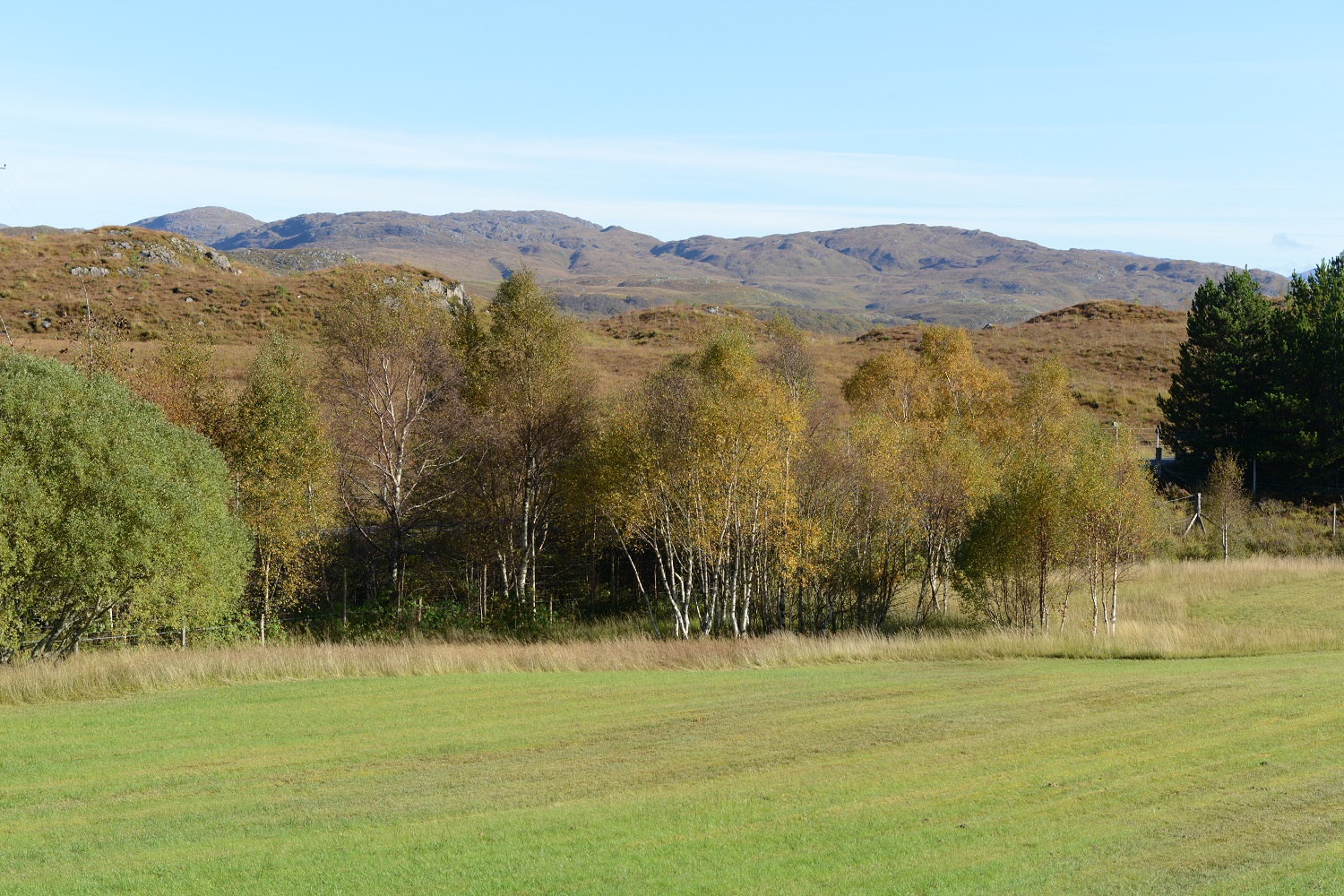
On the edge of the Ardnamurchan peninsula, Cnoc Breac looks east with wonderful views across Loch Shiel to the Claish Moss Nature Reserve, Beinn Resipol (845m) and towards Sgurr Dhomhnuill (888m) in the mountains of Ardgour.
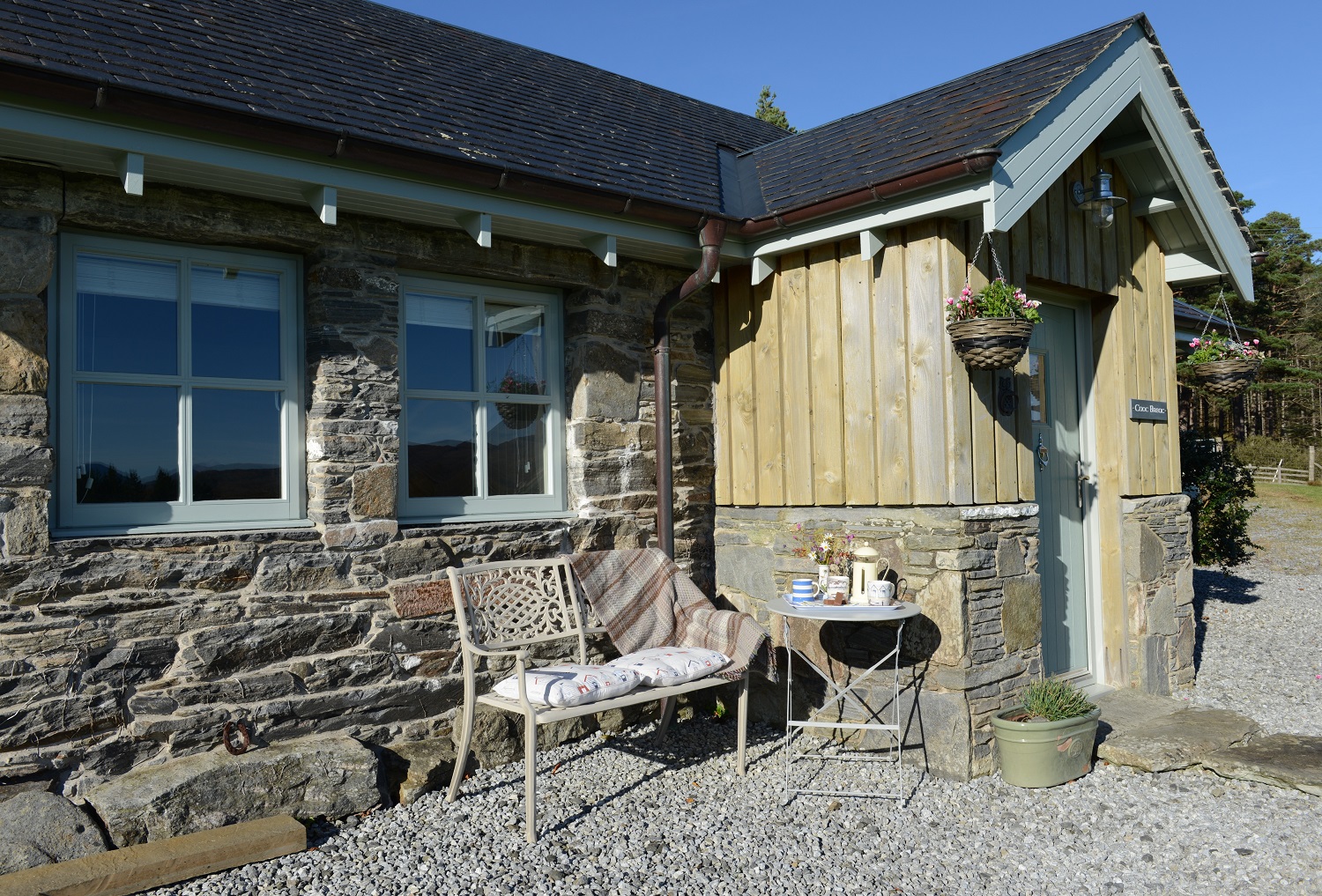
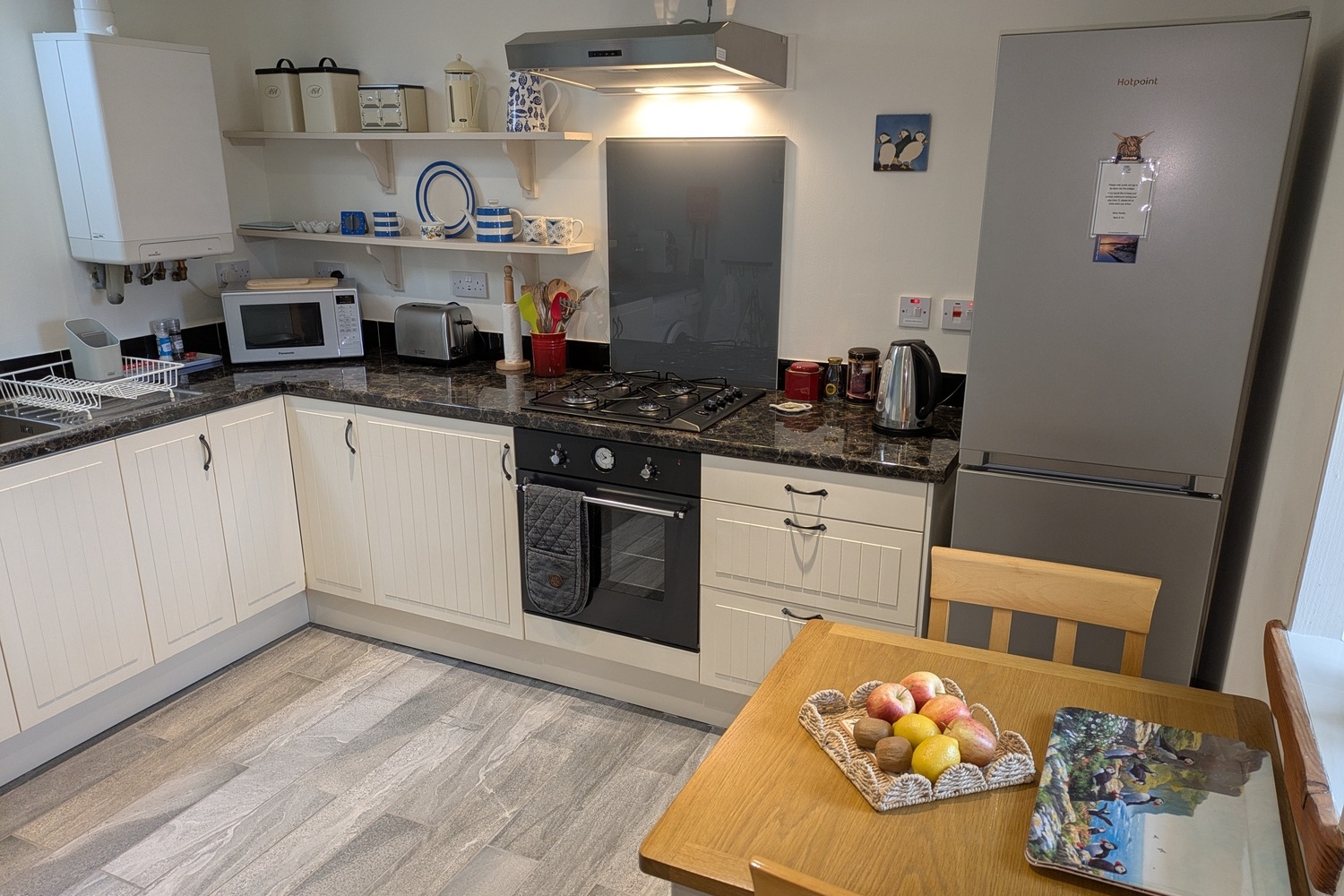
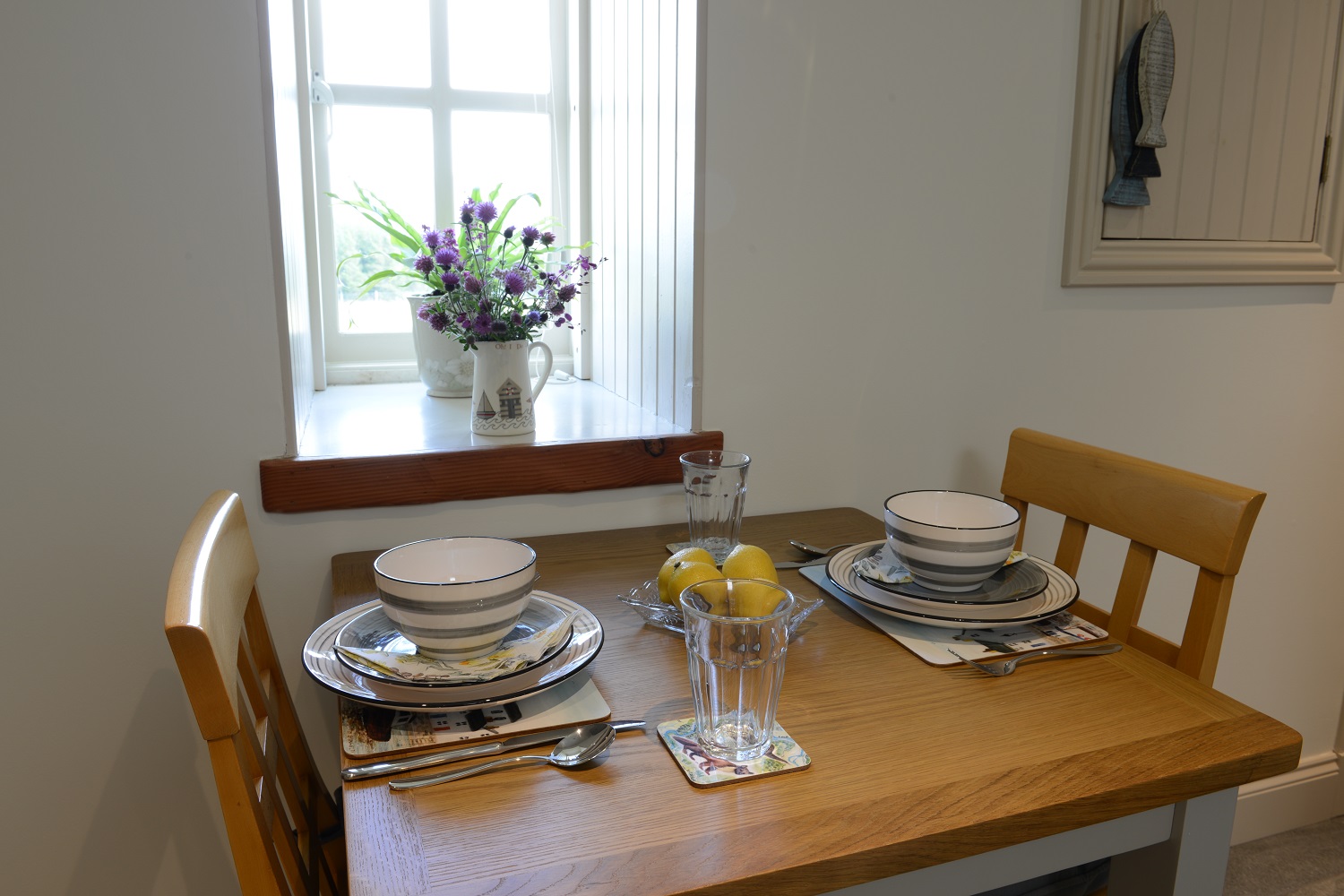
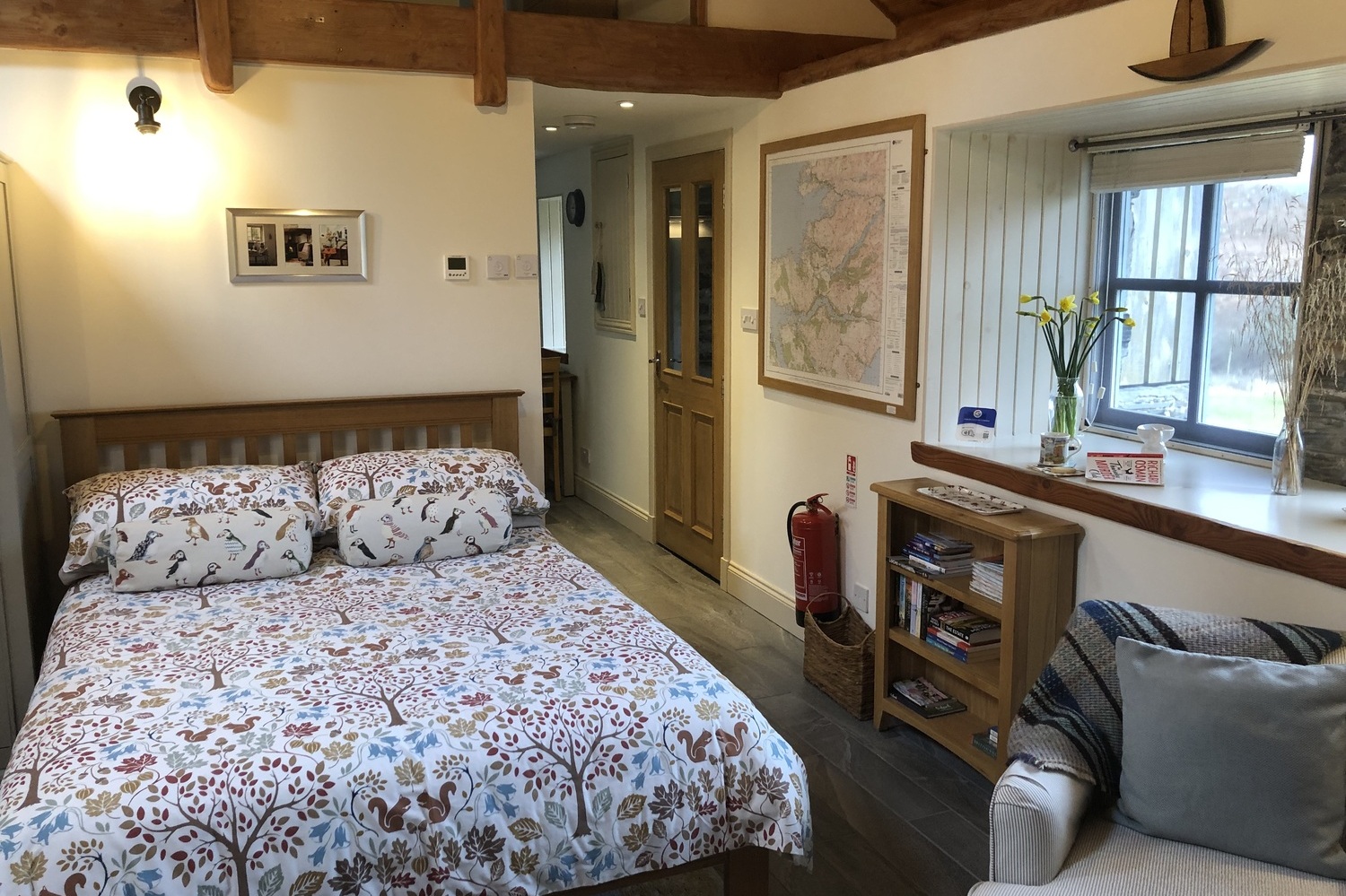
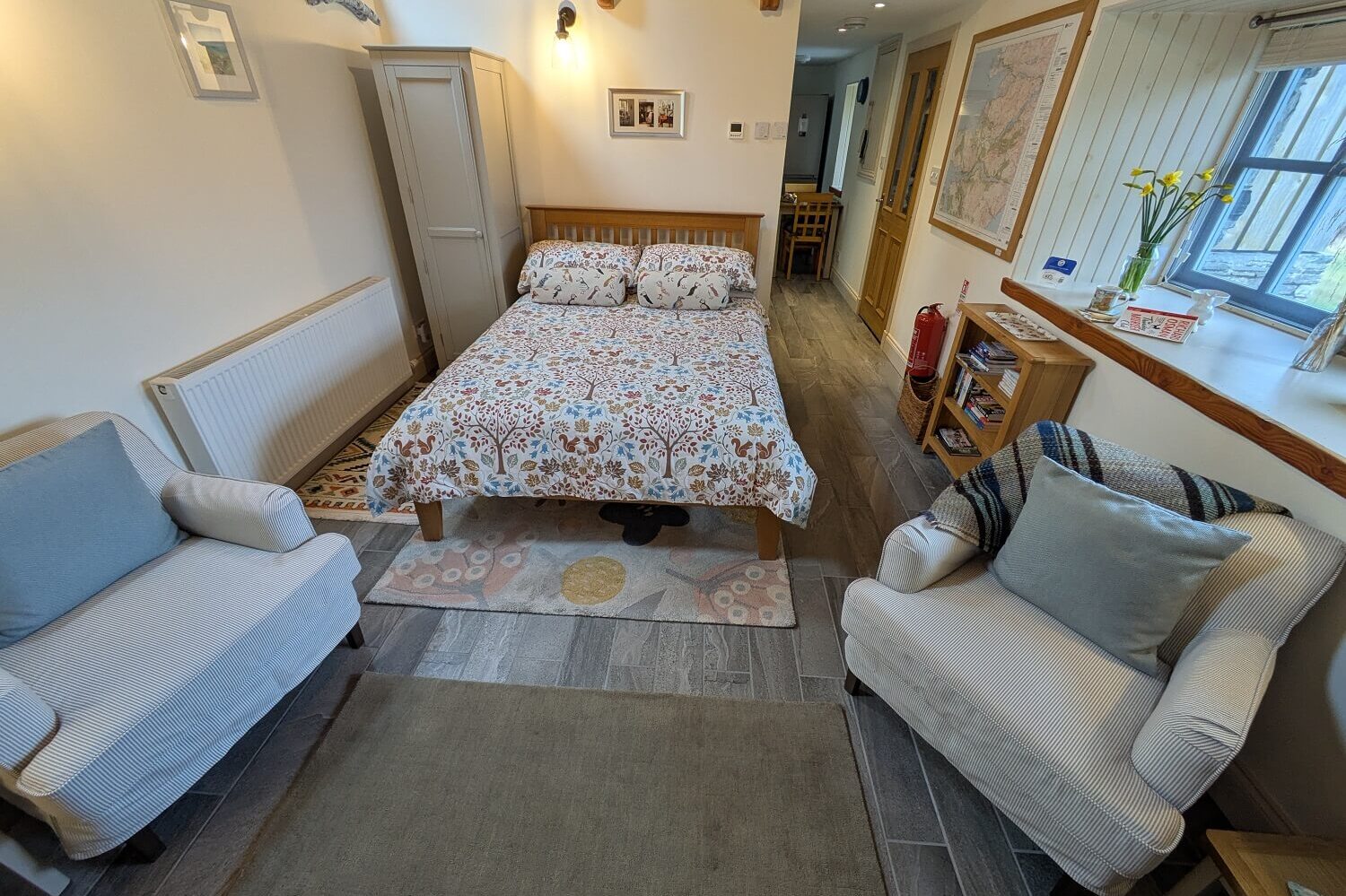
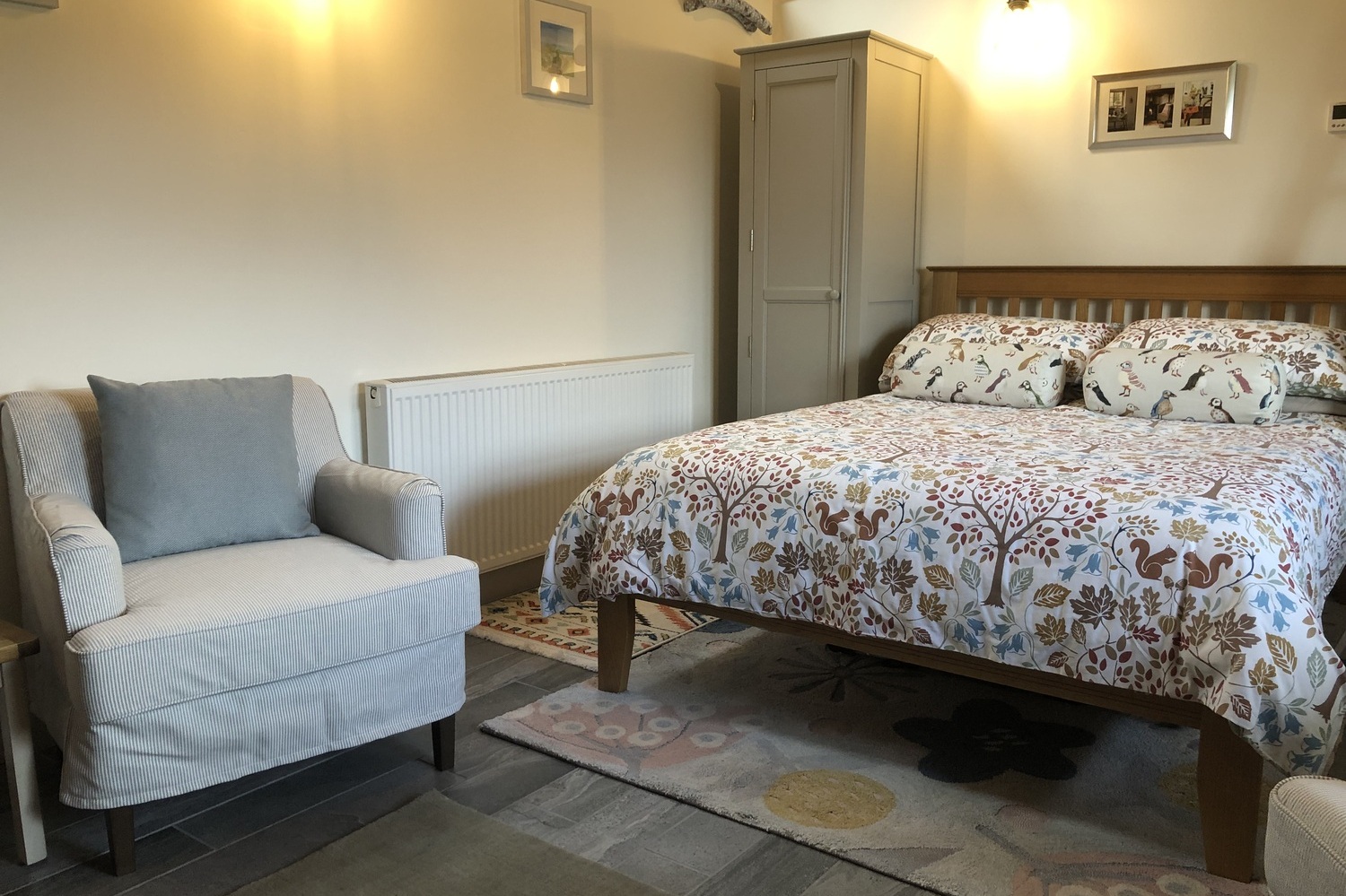
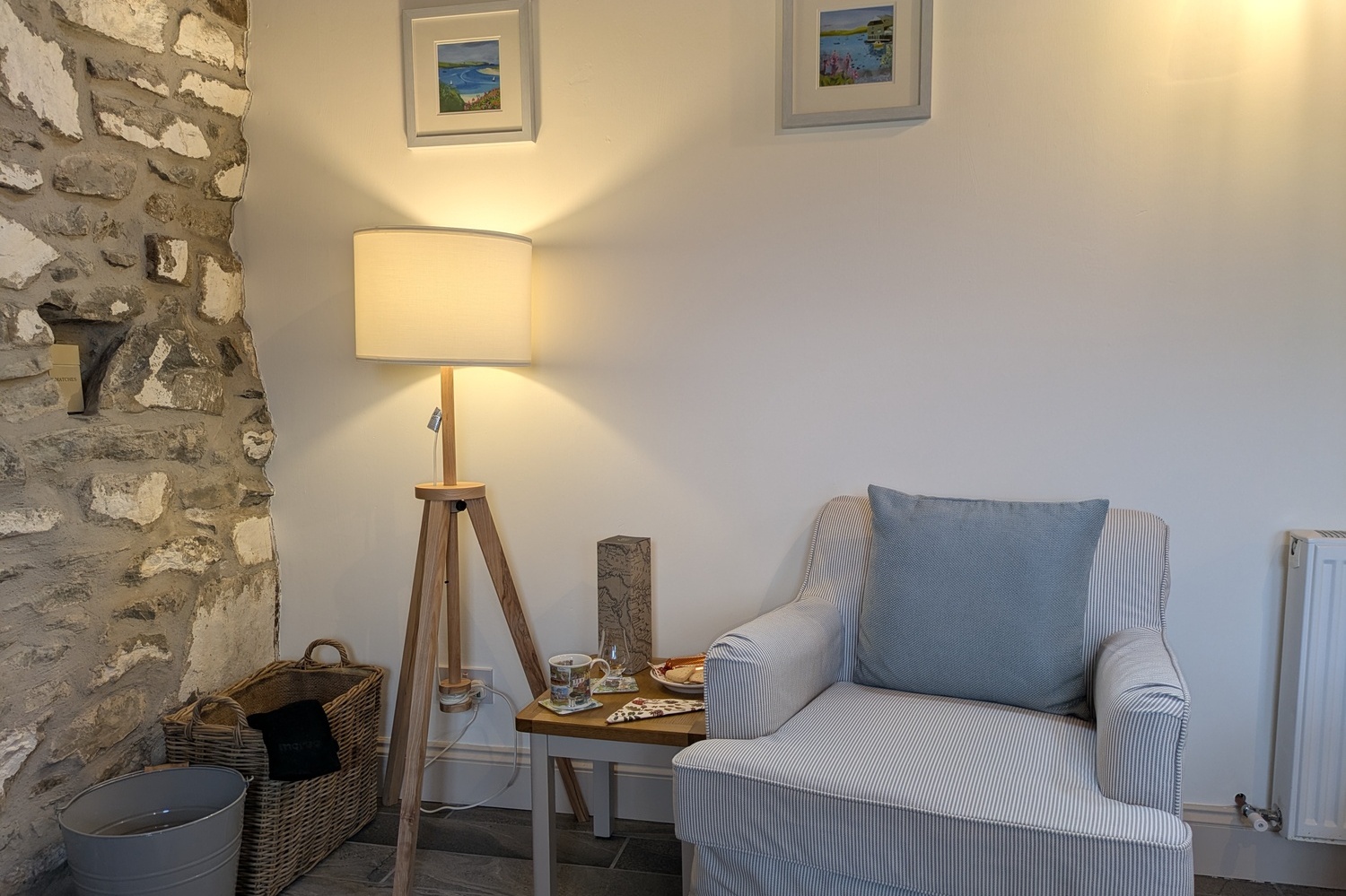
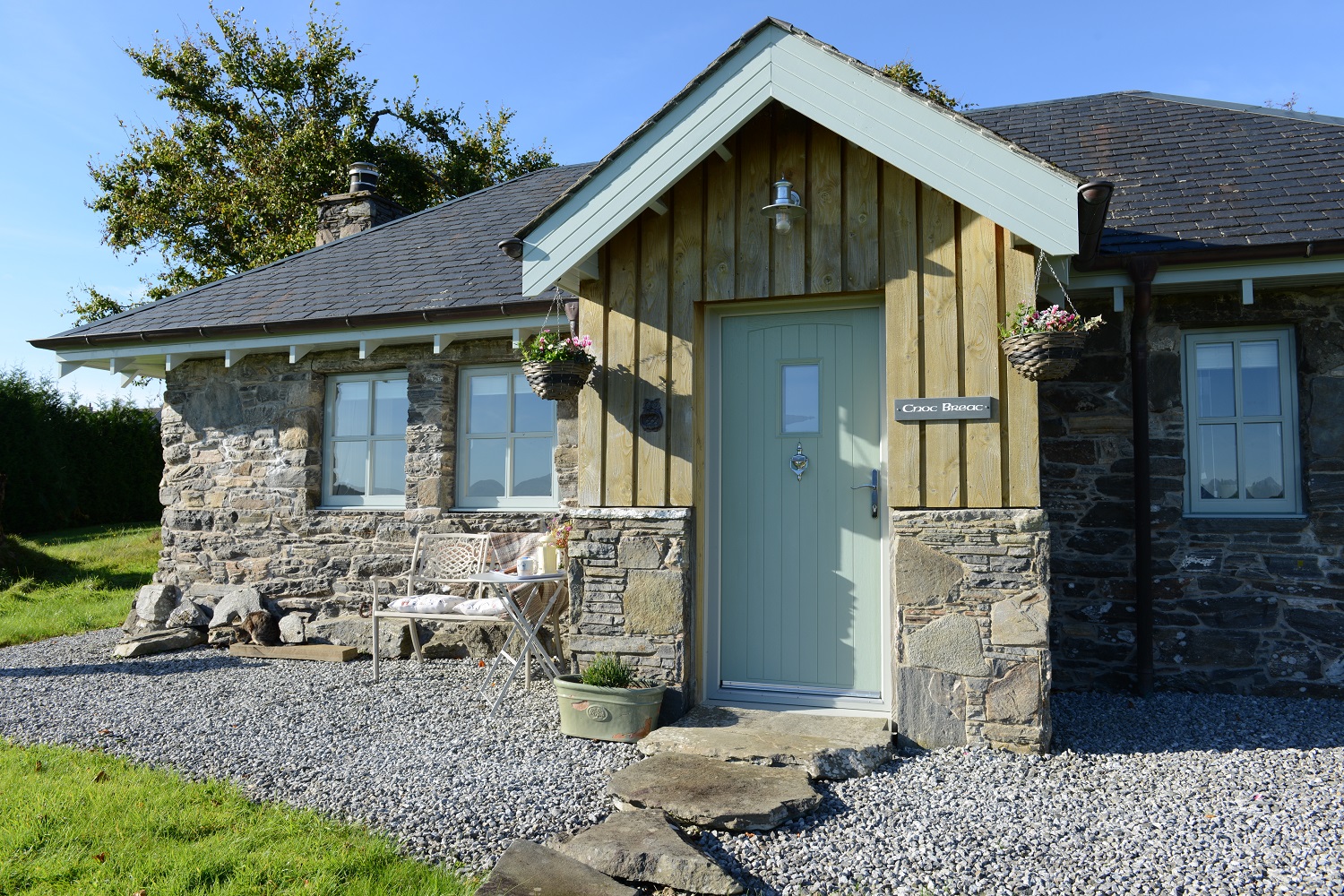
The open-plan design of the cottage includes a well-equipped kitchen/dining area with a fridge-freezer, microwave oven, electric oven, gas hob and a washing machine. The cosy bed/sitting room has one double bed, two armchairs, a selection of books and maps, and a wood burner. Wi-fi is provided. The bathroom has a bath with an overhead shower and a heated towel rail. Central heating is provided throughout the cottage. A fold-up bistro table, bench and cushions are provided for guests to use outside.
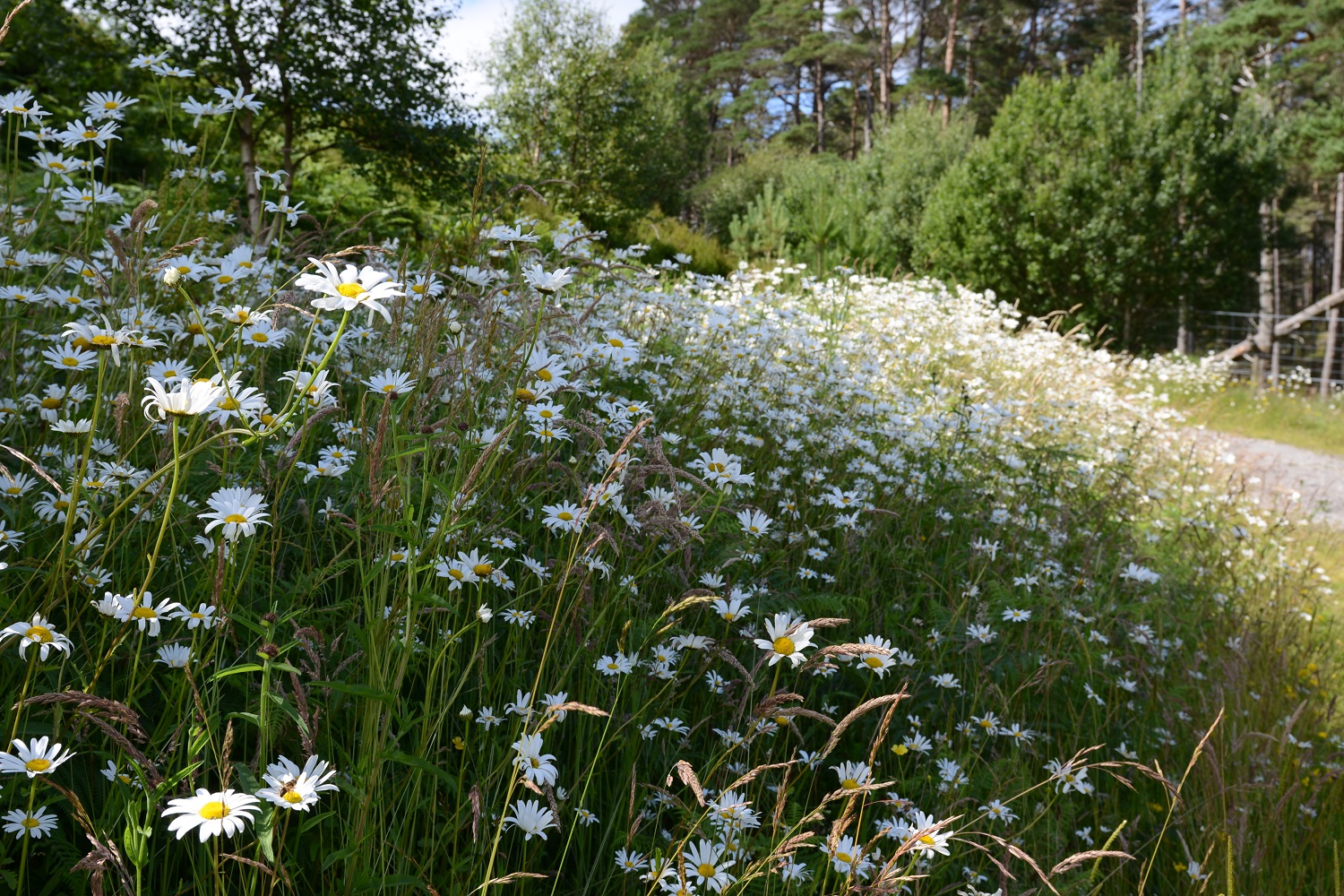
Guests are welcome to explore the garden adjacent to the cottage. In the summer months there are dragonflies, butterflies and bumble bees, and the garden becomes vibrant in colour with many different wildflowers. In late summer the heather begins to flower. We have a path to the top of the knoll (hill) behind the cottage for stunning views. The wee burn (Allt an Deabh) flows under a stone bridge then across the lower garden on its way to Loch Shiel.
The hosts live on site and would be happy to answer any queries during your stay.
Energy Performance Rating (EPC) Band C and the Environmental Impact (CO2) Rating Band C

Cnoc Breac- A brief History

Cnoc Breac (pronounced ‘kroch-ka brech-k’) means a hill; speckled or spotted in Gaelic; presumably from the appearance of rocky outcrops. The name is applied to the former croft, from the knoll behind the house down to the burn. This land was once under cultivation but has now reverted to rushes and heather with the house now being the only visible mark of its former habitation.
The croft was technically identified as 22 Mingarry although it is some distance from the old, now deserted village (referred to as High Mingarry), the remains of which may be found to the north of the present village in the afforested area. The old village was cleared in the 1850’s. Cnoc Breac being much older than the other buildings in Mingarry was probably an outlier of the original village.
The exact age of the house is not certain, but by its general shape, the rounded outer corners, square inner corners, and size, suggest it is probably over 150 years old. Only two other houses of a similar style remain in Moidart in something like their original form: one in nearby Dalnabreac and the other in Glenuig, a few miles to the north.
The original configuration of the house as discovered during restoration work in 1979 by a local co-operative called ‘Teachd air Tir’, is quite unusual in that the house had two outer doors, the present one and another in the position of the present fireplace in the south wall. The central fireplace was almost certainly in position before 1898. It had a large wooden smoke hood which vented through the thatch. The fireplace, and most of the thatched roof were still in place in the late 1960’s, all stained and reeking from many years of peat smoke. There were originally only two windows, one on either side of the present door. Also, the design, and the presence of a cobbled floor below the wooden one in the style of the old ‘black houses’, suggested that at one time both animals and people shared the accommodation. There is no trace of a well near the house, so presumably all the water was carried up from the burn in pails.

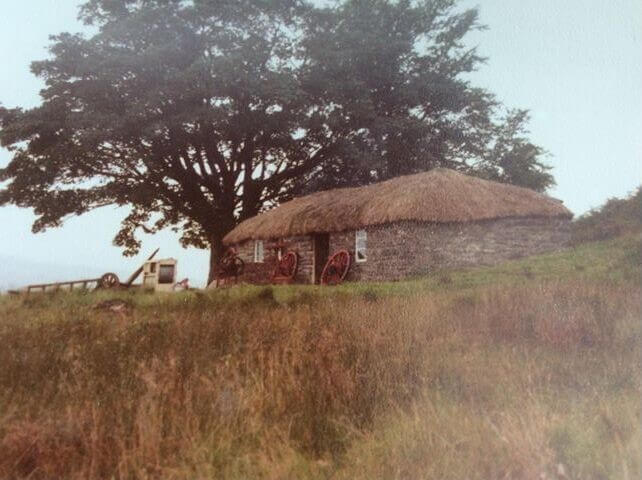
The house underwent considerable reconstruction around 1898 when a brick chimney was added to the south wall and window alterations were made to convert the house into two flats. The flat at the north end had a flagstone floor and one window, and the other had a wooden floor and two windows. The house was occupied by up to two families, the last resident leaving after the second world war.
After the building was restored in 1979 to something like its pre-1898 state, it opened as a museum for two seasons. The brickwork round the windows and chimney were replaced by stone, and the wooden flooring, which had mostly rotted away, was replaced by a stone floor. Near the door, a piece of a quern stone was built into the floor. The roof was also reconstructed using traditional methods (no nails were used) but has since been replaced in a more conventional manner.
By 2009 the building had been reconstructed and converted using modern materials into the cottage we see today. While the outer walls remained as originally built, the original hearth was removed and a mezzanine sleeping area, bathroom, kitchen, and porch were added.